
If the temporary account was not closed, the total revenues seen would be $900,000. Either way, you must make sure your temporary accounts track funds over the same period of time. These accounts can be split into three categories; the revenue accounts, the expense accounts and the income summary accounts. To close the income summary account, the balance in the account needs to be transferred to a capital account (generally the retained earnings). The other main type of account is the permanent account, in which balances are retained on an ongoing basis. These accounts are aggregated into the balance sheet, and include transactions related to assets, liabilities, and equity.

Accounting made for beginners

For example, at the end of the accounting year, a total expense amount of $5,000 was recorded. The amount is transferred to the income summary by crediting the expense account, consequently zeroing the balance, and an equal amount is recorded as a debit to the income summary account. Expenses are an important part of any business because they keep the company going. The expense accounts are temporary accounts that show everything that the company spent on its operations, including advertising and supplies, among other expenses. Revenue refers to the total amount of money earned by a company, and the account needs to be closed out at the end of the accounting year.
Temporary vs. permanent accounts recap
- If the temporary account was not closed, the total revenues seen would be $900,000.
- Taking the example above, total revenues of $20,000 minus total expenses of $5,000 gives a net income of $15,000 as reflected in the income summary.
- When you close a temporary account at the end of a period, you start with a zero balance in the next period.
- At the end of the year, its ending balance is shifted to a different account, ready to be used again in the next fiscal year to accumulate a new set of transactions.
- These accounts are aggregated into the balance sheet, and include transactions related to assets, liabilities, and equity.
- Then, another $200,000 worth of revenues was seen in 2017, as well as $400,000 in 2018.
Basically, to close a temporary account is to close all accounts under the category. The accountant then needs to make a debit of $5,000 from the drawings account and a credit of the same amount to the capital account. Because you did not close your balance at the end of 2021, your sales at the end of 2022 would appear Bookkeeping for Veterinarians to be $120,000 instead of $70,000 for 2022.
- A temporary account is an account that is closed at the end of every accounting period and starts a new period with a zero balance.
- Whether you’re just starting your business or you’re already well on your way, keeping organized financial records is a must.
- Either way, you must make sure your temporary accounts track funds over the same period of time.
- They allow for transactions to be reflected correctly in the right financial period as long as they are accurately closed out at the end of every financial period.
Permanent account example

Then, you can look at your accounts to get a snapshot of your company’s financial health. Temporary accounts are important for any accountant or business owner. They allow for transactions to be reflected correctly in the right financial period as long as they which of the following is a temporary account? are accurately closed out at the end of every financial period. This way, all 3 accounts start the new financial year with a zero balance on 1 January 2023 and will have only 2023 transactions recorded, avoiding overstatement of profits. Surprisingly, the report shows revenues of $160,000, cost of goods sold of $80,000 and administrative expenses of $25,000 for net profit of $55,000. The accountant knows there’s something wrong with these numbers since they are abnormally high.
Temporary Accounts in Accounting: What are They? (Examples)
A temporary account is an account that is closed at the end of every accounting period and starts a new period with a zero balance. The accounts are closed to prevent their balances from being mixed with the balances of the next accounting period. The objective is to show the profits that were generated and the accounting activity of individual periods. To avoid the above scenario, you must reset your temporary account balances at the beginning of the year to zero and transfer any remaining balances to a permanent account. Ensuring temporary accounts start a new financial year with a zero balance should become second nature.
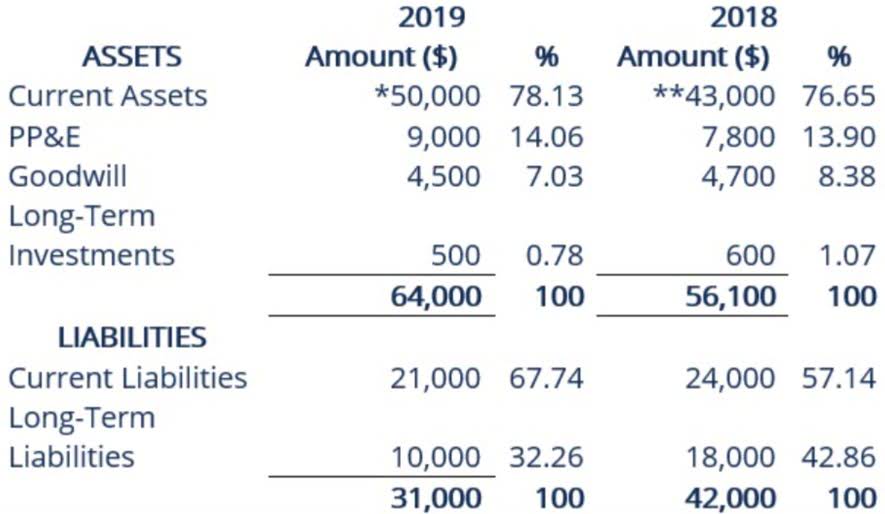
All income statement accounts are considered temporary accounts. At the end of a financial period, all transactions from the revenue accounts and expense accounts are transferred to the income summary account as shown above. Accountants learn early on that there are multiple types of accounts classified as assets, liabilities, equity, revenues or expenses.
What are Temporary Accounts in Accounting? (The Definition)
To do this in practice, there are temporary accounts (also known as nominal accounts). contribution margin More specifically, temporary accounts keep the record of transactions for a financial period. A temporary account is an account that begins each fiscal year with a zero balance. At the end of the year, its ending balance is shifted to a different account, ready to be used again in the next fiscal year to accumulate a new set of transactions. Temporary accounts are used to compile transactions that impact the profit or loss of a business during a year.